





Square Knives: Precision-Ground Carbide Insert Blades for Spiral and Helical Cutterheads
Square knives are indexable carbide inserts designed to replace worn or chipped cutting edges in spiral and helical cutterheads on planers, jointers, and CNC woodturning lathes. Each insert offers four precision-ground edges, so when one dulls, a 90-degree rotation exposes a fresh cutting face. Sheartak carries square knives from 11mm to 15mm, ground to +/-0.01mm tolerance for consistent, line-free results.
What Are Square Knives and Where Are They Used?
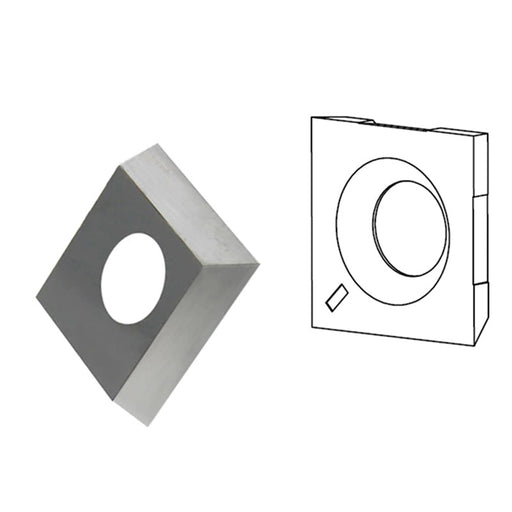
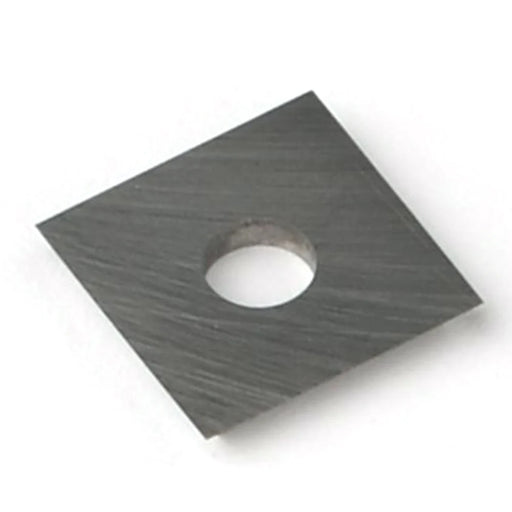
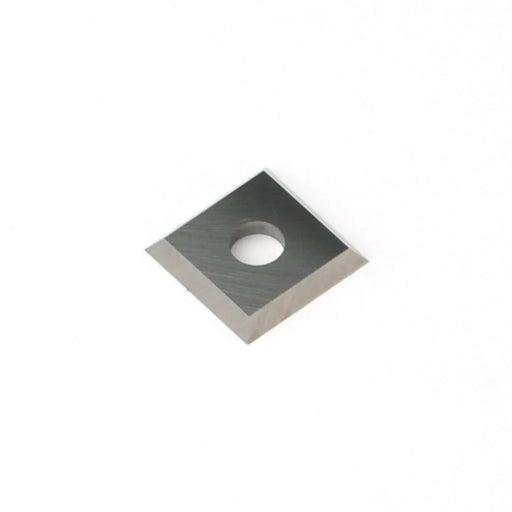
A square knife is a small, flat carbide insert with four identical cutting edges arranged around its perimeter. Each insert drops into a precision pocket machined into the body of a spiral or helical cutterhead, where it is locked in place with a torx or hex screw. The design is fundamentally different from a traditional straight planer knife: rather than one long blade spanning the full width of the cutterhead, dozens of small inserts stagger across the head in a helical pattern.
The primary application is stationary woodworking machinery. Square knives are the standard replacement consumable for spiral cutterheads on thickness planers and jointers, where the helical insert arrangement produces a shearing cut that significantly reduces tear-out on figured and reversing grain. They are also used in certain CNC copy woodturning lathes where insert-style tooling replaces conventional HSS turning tools. Square knives are not interchangeable with rectangular lathe knives or the HSS cutter blocks found on older straight-knife machines.
Choosing the Right Size: Square Knife Dimensions Explained
Selecting the correct square knife comes down to three specifications: the pocket size of your cutterhead, the insert thickness, and the bevel angle. Getting all three right ensures the insert sits flush in its pocket, locks securely, and presents the correct cutting geometry to the workpiece.
The most common square knife sizes in the North American market are 14x14x2.0mm and 15x15x2.5mm.
The 14mm insert is standard on many Grizzly spiral heads and a wide range of imported helical cutterheads.
The 15mm insert, at 2.5mm thick, is the size used in Byrd Shelix cutterheads and several Powermatic and Jet configurations. Less common square knife sizes include 11x11x2.0mm for compact cutterheads, 12x12x2.2mm for certain European and Asian machines, 13.8x13.8x2.5mm for Felder and Hammer spiral heads, and 14.17x14.17x2.5mm for specific Grizzly models.
When in doubt, measure an existing insert with a caliper or check your cutterhead manual for the reference part number.
Thickness matters because it determines how much the insert protrudes from the pocket. Using an insert that is too thin creates a recess; too thick and the insert will not seat properly. Bevel angle is a function of the material being cut: a 30-degree bevel is the standard for hardwoods and most all-purpose use, while a 37-degree bevel suits softwoods and delivers a finer finish on resinous species like pine and cedar.
Straight Edge vs. Radius Edge: Which Should You Choose?
A straight-edge insert has a flat cutting face with no radius on the corners. It produces crisp, defined results on softwood, MDF, HDF, and plywood, and is the right choice when processing sheet goods or dimensioning softwood framing lumber. The trade-off is a faint witness line where adjacent inserts overlap, which is most noticeable on wide, light-colored workpieces.
A radius-edge insert introduces a shallow arc ground along the cutting face, typically 100mm (R100) or 150mm (R150). The curve blends the cut between adjacent inserts, eliminating chatter marks on hardwoods and producing a noticeably smoother surface on figured grain such as curly maple or quilted sapele. For cabinet shops processing mostly hardwood, a radius-edge insert in the R150 range is the standard choice. Some inserts also carry a small corner radius (noted as 4R0.5) which further reduces edge chipping at the corners of the cutting face and extends useful insert life on abrasive species.
Carbide Grade and Why It Matters
Not all carbide inserts are manufactured to the same standard. Sheartak square knives are produced to US Grade C3 / ISO K10, with a bending strength of 2,350 PSI and a hardness that maintains edge integrity across extended production runs. Each insert is precision-ground on all four cutting faces to a tolerance of +/-0.01mm.
Generic inserts sourced from low-cost marketplaces are frequently manufactured to looser tolerances, sometimes +/-0.05mm or worse. An insert that is even slightly out of tolerance will sit at a fractionally different height in its pocket compared to its neighbors, creating a repeating pattern of fine ridges across the planed surface and increasing vibration and noise during the cut. Dimensional inconsistency across a batch is a real source of rework and downtime in any production environment.
Compatibility: Matching Square Knives to Your Cutterhead
Sheartak square knives are tested for compatibility across the most widely used spiral and helical cutterhead brands in North America. The 15x15x2.5mm square knives fit Byrd Shelix cutterheads (reference KN400) and the full range of Grizzly H-series helical heads including H7354, H9893, and related models for both planers and jointers. They are also compatible with Powermatic and Jet machines that share the same 15mm pocket specification. Sheartak's own Shearcut spiral cutterheads use the same 15x15x2.5mm inserts, so existing customers can stock a single size for both the cutterhead and replacement supply.
The 14x14x2.0mm inserts cover a broad range of machines including Grizzly T21348 spiral heads, King Canada helical models, and a wide range of imported CNC copy lathes and woodturning machines that use indexable insert tooling in a 14mm pocket. Tigra-specification inserts in both 14mm and 15mm are stocked separately for European-origin machines such as Felder, Hammer, and certain SCM models, where the corner geometry and mounting hole position differ slightly from the standard North American specification.
Dimar-compatible square knives in 14x14x2.0mm are also stocked as direct replacements for Grizzly and Shop Fox planers fitted with Dimar spiral heads, available in 10-piece packs.
How to Identify the Right Insert for Your Machine
The fastest method is to remove an existing square knife and measure it with a digital caliper: length and width to the nearest 0.1mm, then thickness. If the cutterhead is new, locate the model number on the body or in the machine manual and cross-reference with the compatibility notes on each product listing. Sheartak product pages list specific Grizzly, Byrd, Powermatic, Jet, King Canada, and Dimar part numbers for each insert size.
The Indexable Advantage: Four Edges, One Insert
The core economic and operational benefit of a square knife is the four-edge design. A conventional HSS planer knife has a single usable edge; when it dulls or chips, the entire knife must be removed, sharpened on a grinding jig, and carefully reinstalled with feeler gauges to set projection height. That process takes time and introduces the risk of inconsistent knife height across the cutterhead width, which is a common cause of planer lines and uneven surface finish.
With a square insert, a dulled edge takes roughly 30 seconds to address: loosen the torx screw, rotate the insert 90 degrees to a fresh edge, retighten. No grinding, no shimming, no height-setting. Each insert delivers four complete service cycles before it needs to be discarded and replaced. For a production environment where downtime directly affects output, the maintenance reduction alone justifies the switch. If your machine is still running traditional straight knives, the spiral and helical cutterheads at Sheartak are designed around this same indexable insert system from the start.
The same logic applies to a chipped edge. With a square knife, a chip means rotating to the next face rather than pulling the entire knife for resharpening. Three remaining edges are still available, and the insert stays in service until all four faces are spent. That single characteristic eliminates a significant source of unplanned downtime in any active shop.
Why Choose Sheartak Square Knives?
Sheartak is a family-operated tooling supplier based in Waterloo, Ontario, serving woodworkers and production shops across the United States and Canada. The business was built on the premise that carbide quality and dimensional consistency determine real-world cutting performance, and that premise drives every specification decision for the square knives line.
That focus on consistency matters most at the batch level. A shop restocking 100 or 200 inserts at a time needs every piece in the order to perform identically to the originals, with no variation in cutting height or edge geometry. Sheartak sources from established carbide manufacturers with traceable quality control, which means the last insert out of the box cuts the same as the first.
Every insert in the Sheartak range is manufactured to US Grade C3 / ISO K10, precision-ground to +/-0.01mm across all four cutting edges, ensuring a full replacement batch performs identically to the originals in cutting height and surface finish. Sheartak also stocks Tigra-branded square knives for high-output production work. The carbide inserts collection is organized by size and specification, covering the exact sizes, bevel angles, and corner radii that match the cutterheads sold in the North American market. For shops restocking regularly, that means no cross-referencing exercise and no compatibility guesswork.
Frequently Asked Questions
What size square knife do I need for my planer or jointer?
Check the cutterhead label or owner's manual for the insert pocket dimensions. Most Grizzly and Byrd Shelix heads take 14mm or 15mm inserts, while Felder and Hammer machines typically use 13.8mm.
Can I use Sheartak square knives in a Byrd Shelix cutterhead?
Yes. The 15x15x2.5mm inserts are fully compatible with Byrd Shelix cutterheads for planers and jointers, including the KN400 reference size, and are a direct drop-in replacement.
How many cutting edges does each square knife have?
Each insert has four cutting edges. Rotate 90 degrees when one edge dulls to expose a fresh, factory-sharp face. No sharpening equipment is needed at any point.
Do square knives need sharpening?
No. When all four edges are spent, replace the insert rather than attempting to regrind it. This keeps downtime minimal and eliminates the risk of inconsistent projection height after resharpening.
What is the difference between straight and radius-edge square knives?
Straight-edge inserts suit softwood and sheet goods. Radius-edge inserts (R100 or R150) reduce chatter marks on hardwood and produce a smoother surface finish on figured grain such as curly maple.
What carbide grade are Sheartak square knives made from?
Sheartak inserts use US Grade C3 / ISO K10 carbide, precision-ground to +/-0.01mm, with a bending strength of 2,350 PSI for reliable edge retention and dimensional consistency batch to batch.